
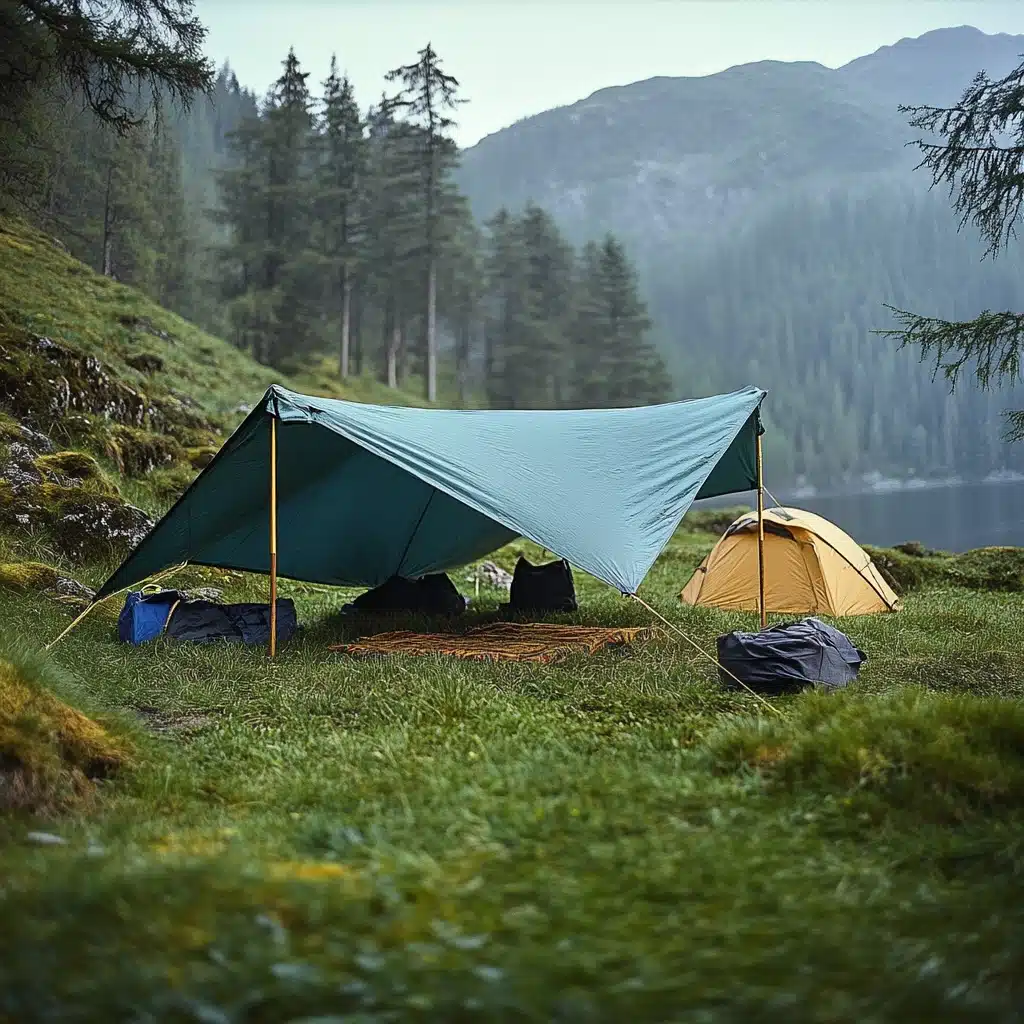
Let’s talk about the best camping tarps. They might not be the coolest thing in your pack, but tarps are the quiet MVPs of any outdoor adventure. If you’ve ever been caught in a sudden downpour, sat on the damp ground, or desperately tried to find shade under a blistering sun, then you know just how essential a tarp can be. Think of them as your multi-tool for nature—always ready to cover your back (and your gear). Plus, when you’re keeping dry with minimal gear, you’re helping to reduce your environmental footprint. Less gear, less impact, right?
In this guide, we’ll take a deep dive into everything you need to know about camping tarps, from what to look for, how to use them, and a few pro tips to make your outdoor experience better. By the end, you’ll know exactly how to pick the best camping tarp for your adventures, whether you’re a seasoned backpacker or just getting started.
Editor’s Take – Bianca Moore

When it comes to all-weather performance and eco-conscious design, the Kammok Kuhli Pro Shelter is a standout. It’s tough, reliable, and built with sustainability in mind. For ultralight adventurers, the MSR Thru-Hiker 100 Wing Shelter is a top choice—lightweight, spacious, and perfect for those who need solid protection without carrying extra weight. Both tarps offer unbeatable versatility, no matter the adventure
Why Every Camper Needs a Tarp: The Outdoor Swiss Army Knife
You might be thinking, “Do I really need a camping tarp?” Trust us, you do. It’s like that trusty rain jacket you never leave behind—you might not always need it, but when you do, it saves the day. From providing shelter in a storm to acting as a groundsheet for your tent, tarps are lightweight, versatile, and indispensable. Plus, using a tarp means you’re less likely to damage the natural ground by spreading out on the dirt or grass, leaving the environment in better shape for the next adventurer.
If you’ve ever been stuck under a leaking tent, slowly feeling the cold drip of doom on your forehead, then you know why a solid camping tarp is worth its weight in gold. It’s the difference between cozying up dry or transforming into a human sponge by morning.

What to Look for in a Camping Tarp
Not all tarps are created equal. Choosing the right one means considering the features that matter most to your adventure style. Here’s a breakdown of what to look for:
1. Material
Tarps come in various materials, each with its own perks:
- Nylon: Lightweight and easy to pack, perfect for backpacking trips. Nylon tarps are great for fast-and-light adventures.
- Polyester: Slightly heavier but more durable and resistant to UV damage, which is ideal for long-term setups.
- Polyethylene (Poly): The heavyweight champ—super waterproof but bulkier, making it more suitable for car camping or base camps. If you go for this option, consider the longevity of the tarp to ensure you’re buying something that lasts, helping to minimize waste.
2. Waterproofing
One of the main jobs of a tarp is to keep you and your gear dry. Look for tarps with high waterproof ratings (measured in mm), usually 1200mm to 3000mm. The higher, the better. Because let’s be real, no one wants to wake up to find their camp looks more like a kiddie pool. And by staying dry, you’re reducing the chances of needing disposable plastic coverings or other single-use items that harm the environment.
3. Size
Tarps come in a range of sizes, so it’s all about matching the tarp to your needs. Are you solo camping or trying to cover your whole family’s gear? Small tarps (6×8 ft) are lightweight and packable, while larger ones (10×12 ft) offer more coverage for group setups.
4. Weight
If you’re hiking into the backcountry, weight matters. Ultralight tarps can weigh as little as 1 pound, while more durable, larger options might weigh up to 3 pounds. For the ultralight campers out there, you know every ounce feels like a pound by mile 15—so a lightweight tarp is a no-brainer. Plus, carrying less weight means you use less energy, leaving less of a carbon footprint behind on your journeys.
5. Attachment Points
The more attachment points (grommets or loops), the better. This gives you flexibility when setting up your tarp and helps you adapt to any situation, whether you’re stringing it between trees or pegging it to the ground. Because the last thing you want is your tarp playing a game of “catch the wind” at 2 a.m.

Types of Camping Tarps: From Ultralight to Heavy-Duty
When it comes to tarps, there’s a model for every type of camper, from the ultralight minimalist to the family camper. Here’s a breakdown of the main types and what they’re best for:
1. Traditional Rectangular Tarps
The classic choice. These no-nonsense tarps are versatile and come in a range of sizes. They’re great for all-purpose camping, whether you’re using them as a shelter, ground cover, or sunshade. It’s the grilled cheese of tarps—simple, reliable, and gets the job done. And if you’re choosing one with a longer lifespan, it means fewer replacements, which is always a win for Mother Nature.
2. Hexagonal and Asymmetrical Tarps
These are the cool, more specialized cousins of the rectangular tarp. Designed mainly for hammock camping, these shapes give you coverage without unnecessary weight, making them perfect for minimalist backpackers.
3. Canopy Tarps
Best for group camping or setting up a communal space at camp, canopy tarps are like your portable party tent. You can string them up over a cooking area, your tent entrance, or a chill-out spot. Think of it as your portable outdoor living room—just add camp chairs and snacks. And while you’re setting up that perfect shade, remember: creating shelter with a reusable tarp helps cut down on single-use plastic tarps that often end up as litter.
4. Ultralight Tarps
For the hikers and thru-hikers who count every ounce, ultralight tarps are a dream. They may not be the most durable, but if you’re trekking long distances and need to keep your load light, these are the way to go.
*The product images below have been sourced from their respective manufacturer’s website*
The Best Camping Tarps of 2025
Featured Camping Tarps
We’re kicking things off with two standouts: the MSR Thru-Hiker 70 Wing Tarp and the Sea to Summit Escapist Tarp. Both offer ultra-lightweight shelter and versatility—perfect for campers who want protection without the bulk. Whether you’re on a thru-hike or setting up a basecamp, these tarps deliver top-notch coverage with minimal weight.
Most Popular
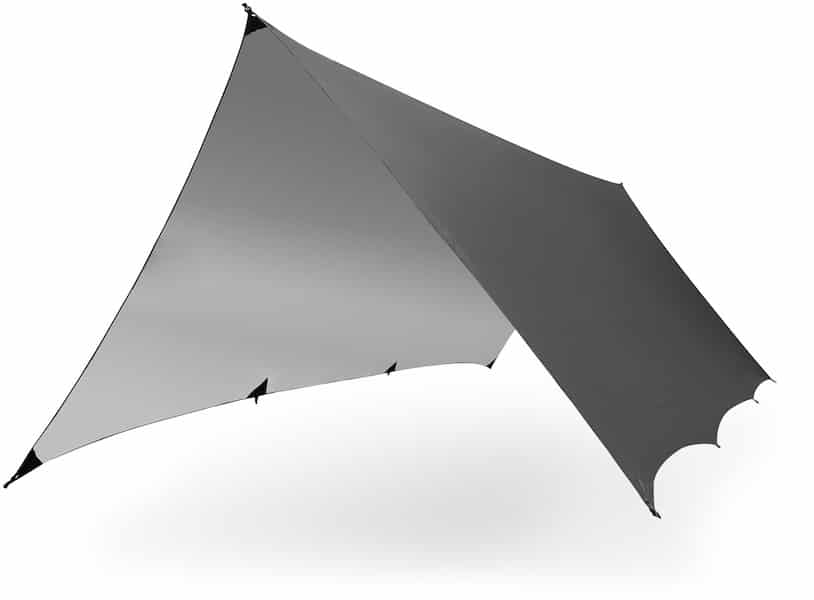
Kammok Kuhli Pro Shelter
The Kammok Kuhli Pro Shelter offers all-weather protection with eco-friendly materials. Lightweight, durable, and perfect for unpredictable conditions, it’s built for adventurers who want sustainability without sacrificing performance.
Best Value
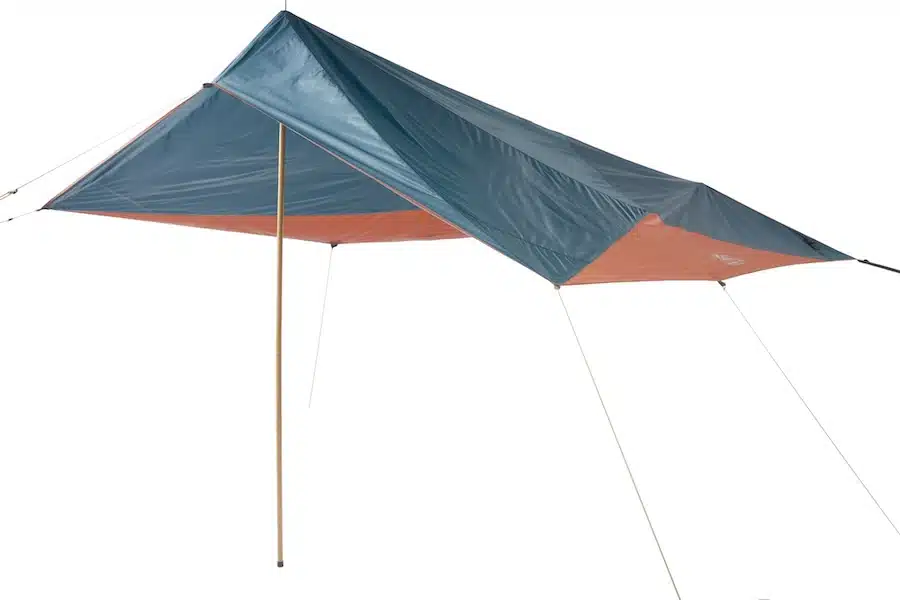
Kelty Waypoint Car Tarp
The Kelty Waypoint Car Tarp is a budget-friendly, easy-to-set-up shelter for car campers. It attaches to most vehicles, creating a spacious, weather-protected area for shade or rain cover.
Jump ahead to our top camping tarps of 2025:
- Best All-Weather Camping Tarp Shelter: Kammok Kuhli Pro Shelter
- Best for Ultralight Group Adventures: MSR Thru-Hiker 100 Wing Shelter
- Best for Car Camping: Kelty Waypoint Car Tarp
- Best for Versatility: Sea to Summit Escapist Tarp Shelter
- Best for Extreme Conditions: AquaQuest Defender Tarp
This article may contain affiliate links, they will never cost you more money but helps Veggie Vagabonds keep making content like this – thank you!
Best All-Weather & Sustainable Camping Tarp Shelter
Kammok Kuhli Pro Shelter
The Kammok Kuhli Pro Shelter is like your trusty shield in the wild—ready to fend off everything from torrential downpours to blazing UV rays. It’s not just a weather warrior, though; it’s got eco-credentials too. This bad boy is made with bluesign®-approved fabrics, which means it’s tough on the elements but kinder to the planet. If you want a shelter that can handle all four seasons without leaving a heavy footprint, the Kammok Kuhli Pro is your tarp.
Eco-Friendly Warrior
Specifications
Overall Rating:
- Durability: ★★★★★
- Weather Protection: ★★★★★
- Ease of Setup: ★★★★☆
- Value for Money: ★★★★☆
Who Is It Good For
This tarp is for adventurers looking to handle unpredictable weather while keeping their environmental impact low. Whether you’re a full-time camper or a weekend warrior, the Kammok Kuhli Pro Shelter has your back, offering reliable protection and eco-conscious materials. Perfect for those who want rugged durability without compromising sustainability.
What We Liked
The Kammok Kuhli Pro Shelter is like the Swiss Army knife of tarps—adaptable, durable, and ready for tough conditions. The Amphibiskin™ fabric shrugs off rain and UV rays, and the knotless setup means you’ll spend more time enjoying the outdoors and less time wrestling with ropes. Plus, its bluesign®-approved materials mean fewer harmful chemicals, so you’re not just protecting yourself but also Mother Nature.
To Be Mindful Of
At $219.95, it’s not the lightest or cheapest option. If you’re focused on ultralight trekking, you might want to explore other options. However, for most campers, its durability and sustainability make it a long-term investment.
Best for Ultralight Group Adventures
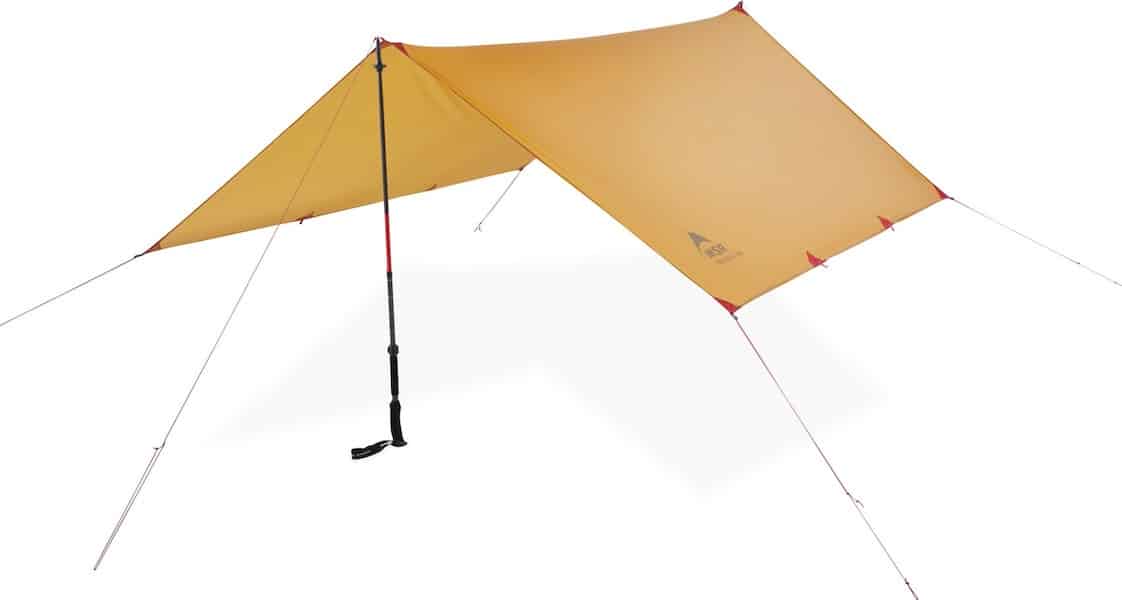
MSR Thru-Hiker 100 Wing Shelter
The MSR Thru-Hiker 100 Wing Shelter is like the trusty sidekick you need for long-distance hikes—a lightweight but tough tarp that packs a serious punch when it comes to weather protection. Designed for ultralight fanatics who want to shave every ounce off their pack, this shelter is ideal for group trips where space and weight matter. And while it’s light enough to forget you’re carrying it, it still offers enough room to comfortably shield up to 3 people from the elements.
Ultralight Hero
Specifications
Overall Rating:
- Weight: ★★★★★
- Weather Protection: ★★★★☆
- Durability: ★★★★☆
- Value for Money: ★★★★☆
Who Is It Good For
The MSR Thru-Hiker 100 Wing Shelter is perfect for ultralight backpackers or small groups that need to keep things light but still want enough space to cook or sleep. Ideal for mild weather, it offers good rain and light snow coverage without the bulk of a tent. For hikers wanting a durable, compact shelter that balances weight and comfort, this tarp delivers.
What We Liked
At just 1 lb. 6 oz., the MSR Thru-Hiker 100 Wing Shelter is the go-to for those who love to travel light. It offers excellent coverage for up to 3 people, and the Xtreme Shield™ coating handles rain like a pro. Its quick, minimalist setup is perfect for those who need protection without wasting time or carrying extra bulk.
To Be Mindful Of
While great for mild weather, it’s not suited for harsh conditions like strong winds or cold. At $249.95, you’re paying for the lightweight benefit, so if weight isn’t a big concern, cheaper options are available.
Best for Car Camping
Kelty Waypoint Car Tarp
The Kelty Waypoint Car Tarp is a budget-friendly yet versatile shelter designed specifically for car camping. With a clever design that attaches easily to most vehicles (SUVs, trucks, or vans), it creates a spacious covered area perfect for providing shade, shelter, and comfort at your campsite. Whether you’re shielding from rain or basking in the shade, this tarp makes your camping experience more flexible.
Car Camper’s Companion
Specifications
Overall Rating:
- Ease of Setup: ★★★★★
- Durability: ★★★★☆
- Weather Protection: ★★★★☆
- Value for Money: ★★★★★
Who Is It Good For
This tarp is perfect for car campers who want quick and easy protection from rain or sun while enjoying a flexible living space next to their vehicle. Whether you’re camping with friends or setting up a family base camp, the Kelty Waypoint Car Tarp keeps things simple, comfortable, and affordable.
What We Liked
The Kelty Waypoint Car Tarp stands out for how easily it transforms your car into a cozy campsite. It’s like having an outdoor living room wherever you go. The large coverage area means you can cook, eat, or hang out comfortably beneath it, protected from the elements. Plus, the adjustable guy lines make it easy to set up in different configurations depending on the weather. The waterproof PU-coated polyester ensures you’ll stay dry during rain, and its durability makes it ideal for long-term use.
To Be Mindful Of
It’s heavier compared to ultralight tarps, but since it’s meant for car camping, weight isn’t much of an issue. At around 5 lbs., it’s still manageable, though not ideal for backpacking. Also, while the shelter offers great coverage, it doesn’t have side panels for complete enclosure, so it’s better suited for milder conditions.
Best for Minimalist Backpackers
Sea to Summit Escapist Tarp Shelter
The Sea to Summit Escapist Tarp Shelter is an ultralight hiker’s best friend. Weighing in at under a pound, it’s made for those who want to trim every ounce from their pack but still need reliable shelter from the elements. Whether you’re setting it up between trees for a shaded rest or rigging it up with trekking poles to keep out the rain, this tarp adapts to whatever adventure throws at you.

Minimalist Champion
Specifications
Overall Rating:
- Weight: ★★★★★
- Durability: ★★★★☆
- Weather Protection: ★★★★☆
- Value for Money: ★★★★☆
Who Is It Good For
If you’re a minimalist backpacker who measures every ounce in your pack, the Escapist Tarp Shelter is your go-to. It’s perfect for those “fast and light” trips where you don’t need a bulky tent, but still want a reliable way to stay dry and covered. Ideal for hikers in milder conditions who love the freedom of flexible setups without sacrificing comfort.
What We Liked
The Escapist Tarp Shelter is a minimalist’s best buddy on the trail. This thing is the definition of “light as a feather, tough as nails.” For solo hikers or duos who are all about shaving off those extra ounces, it’s a dream come true. Whether you’re stringing it up between trees for some much-needed shade or whipping out your trekking poles for a quick rain shelter, this tarp’s adaptability is its superpower. Plus, that water-resistant fabric? We like!
To Be Mindful Of
This shelter is great for chill days and mild weather, but if Mother Nature throws a real tantrum, you might wish for a little more protection. And while the price tag might feel a bit steep for a simple tarp, the weight savings and flexibility make it worth it if you’re counting grams.
Best Camping Tarp for Extreme Conditions
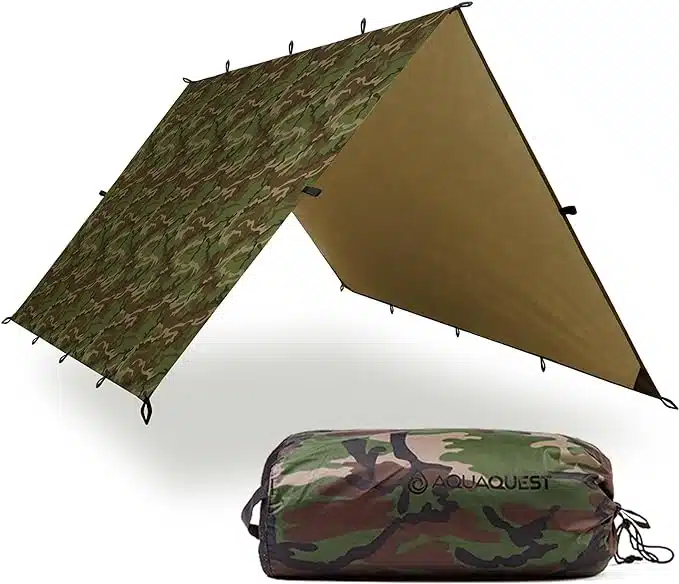
AquaQuest Defender Tarp
When you’re heading into the wild, the AquaQuest Defender Tarp is your ultimate companion for extreme weather. This beast of a tarp is built for durability and protection, making it the go-to for adventurers who aren’t messing around when it comes to rugged conditions. Whether you’re bracing for torrential downpours, high winds, or even snow, the Defender has you covered—literally.
Extreme Weather Defender
Specifications
Overall Rating:
- Durability: ★★★★★
- Weather Protection: ★★★★★
- Ease of Setup: ★★★★☆
- Value for Money: ★★★★☆
Who Is It Good For
The AquaQuest Defender Tarp is perfect for adventurers braving serious weather—whether you’re car camping in a storm or tackling harsh backcountry conditions. If you’re not afraid of a bit of extra weight for extreme durability, this is your tarp.
What We Liked
This tarp is like your best friend in a storm—sturdy, dependable, and always ready for the worst weather. It’s made of 70D nylon and offers insane waterproofing with a 20,000 mm rating. The flexibility with tie-out points makes it versatile for all kinds of setups, while its tough material can handle whatever nature throws at it.
To Be Mindful Of
Weighing over 3 lbs, it’s heavier than most ultralight options, so it’s not ideal if you’re trying to keep your pack weight down. However, if you’re prioritizing protection, this tarp is worth the weight.
How to Set Up a Camping Tarp: Become the Tarp Master
Setting up a tarp can feel like trying to assemble IKEA furniture without the instructions, but with a little practice, you’ll be a pro. Here are some common setups and tips to keep your tarp sturdy and functional:

1. The Classic A-Frame
The go-to setup for reliable shelter. String a line (aka ridgeline) between two trees, drape your tarp over it, and peg down the sides. This gives you a tent-like structure without the weight of an actual tent. Perfect for when you need to escape a sudden rainstorm but don’t want to wrestle with a tent at midnight.
2. The Lean-To
Ideal for windier conditions, this setup is like building a one-sided wall of protection. Great for sitting around the fire, cooking, or simply blocking that relentless breeze. It’s like your personal outdoor windproof bunker, minus the claustrophobia.
3. The Flying V
This setup is designed for heavy rain. By angling the tarp downwards on both sides, it directs water away from your camp, keeping everything underneath bone-dry. Because let’s face it, nobody enjoys waking up in a waterbed when there’s no lake in sight.
Pro Tip: Bring extra paracord. It’s lightweight, versatile, and essential for keeping your tarp secure. You’ll thank yourself when that 3 a.m. gust of wind tries to test your knot-tying skills. And, of course, paracord can be used again and again, reducing the need for disposable or less durable materials that often end up as waste.
Vegan outdoor lover looking for the right gear? Check these out:
We Contacted 20+ Outdoor Companies to Find Out Which of Their Hiking Boots Were 100% Vegan!
The Best Vegan Insulated Jackets and Buyer’s Guide
How to Pick a Vegan Sleeping Bag & Which is Right For You
Or check out our Vegan Adventures section!
Creative Tarp Uses: More Than Just Shelter
The beauty of a camping tarp is in its versatility. Sure, it keeps you dry, but a well-placed tarp can do so much more:
- Gear Storage: Use your tarp as a groundsheet to keep your packs and gear off the wet ground.
- Sunshade: String it up over your campsite for some much-needed shade on those hot summer days. It’s basically a portable palm tree without the coconuts.
- Windbreak: Set your tarp up vertically to block the wind—perfect for keeping the campfire smoke out of your eyes.
- Emergency Shelter: In case things go sideways, a tarp can be rigged into a quick emergency shelter.
- Reflect Heat: In cold conditions, a tarp can help reflect heat back towards your campfire or tent. Like a cozy heat blanket that doesn’t need batteries.

More Gear for Your Adventures
Your tarp is just one part of the equation for an epic outdoor experience. To make sure you’re fully prepared for your next adventure, check out these other essential gear guides and reviews:
- The Best Camping Chairs: Find the perfect chair to relax in after a long day on the trail.
- Best 2 Person Tent: Discover top-rated tents for smaller groups or couples.
- Vegan Backpacking Food: Stay energized on the trail with plant-based options that are easy to pack.
- Best Sleeping Mats for Camping: Ensure a comfy night’s sleep, no matter where you pitch your tent.
- Backpacker Travel Insurance: Don’t hit the trail without knowing you’re covered in case of an emergency.
- Sustainable Backpacks: Explore eco-friendly options for carrying your gear in comfort and style.
- 49 Things for Your Camping Packing List: Don’t forget the essentials! Use our checklist to make sure you’re fully prepared for your trip.
- Best Waterproof Jackets for Hiking: Stay dry and comfortable on the trail with our top picks for waterproof hiking jackets, designed to handle whatever the weather throws your way.
- Vegan Hiking Boots: Find durable, cruelty-free hiking boots that offer comfort and performance on all your adventures, whether you’re tackling rocky paths or muddy trails.
- Vegan Hiking Socks: Keep your feet blister-free and comfy with these vegan-friendly hiking socks, perfect for long days on the trail in any condition.
- Eco-Friendly Camping Tips: Learn how to reduce your environmental impact with these simple, effective eco-friendly camping tips for sustainable outdoor adventures.
- Best 4-Person Backpacking Tents: Discover the best 4-person backpacking tents, offering spacious, lightweight shelter for group adventures without weighing you down.
- Patagonia Winter Clothing Review: Stay warm and sustainable this winter with Patagonia’s eco-friendly clothing, tested to handle the coldest outdoor conditions.
Eco-Friendly Tarps: Protect Nature While You Explore It
At Veggie Vagabonds, we’re all about eco-conscious adventures. That means making gear choices that help protect the wild spaces we love to explore. When picking a tarp, consider brands that use recycled materials or low-impact manufacturing processes. Because let’s be real, there’s nothing adventurous about leaving a trail of environmental destruction behind.
Plus, using a tarp can help reduce your impact. Instead of stomping down the grass or damaging the ground by setting up camp, a tarp creates a barrier that protects the earth
FAQ: Best Camping Tarps
Why should I use a tarp when camping?
A camping tarp is like the Swiss Army knife of the outdoor world. It provides shelter from rain, sun, and wind, serves as a groundsheet, and can even be used as a makeshift privacy screen. It’s lightweight, versatile, and a must-have for both minimalist and car campers alike!
What’s the best material for a camping tarp?
It depends on your needs. Nylon is lightweight and perfect for backpackers. Polyester offers more UV resistance and durability, while polyethylene is great for heavy-duty, waterproof protection (think car camping). Each material brings something different to the table, so pick the one that fits your adventure.
How do I set up a camping tarp?
You’ve got options! The classic A-Frame setup works for rainy conditions, while a Lean-To is great for blocking wind. With enough tie-out points, you can get creative with setups. Pro tip: bring extra paracord to give yourself more flexibility when setting up in tricky spots.
Are camping tarps waterproof?
Most camping tarps are waterproof or water-resistant, but it’s important to check the material’s waterproof rating (measured in mm). A tarp with a rating of 1200mm to 3000mm will keep you dry in most conditions. Some ultralight tarps are more water-resistant than fully waterproof, so choose based on your adventure.
Can a tarp replace a tent?
Yes, but it depends on your comfort level. For ultralight backpackers, tarps can offer great shelter with minimal weight. You’ll need a bit more setup time and creativity compared to a tent, but tarps provide flexibility, especially in mild weather. Just remember: you might be more exposed to the elements!
What size tarp do I need for camping?
It depends on how many people and how much gear you’re covering. A smaller tarp (6×8 ft) works for solo campers, while larger options (10×12 ft or bigger) are ideal for groups. The key is to balance coverage with the weight you’re willing to carry.
How do I care for my camping tarp?
Tarps are tough, but they still need TLC. After each trip, clean off dirt and debris, let it dry completely, and store it loosely in a cool, dry place. Avoid folding it the same way every time to prevent weak spots and always check for wear and tear before your next adventure.
Can I use a camping tarp in winter?
Absolutely! A good tarp can offer extra protection for winter campers. Whether it’s shielding your gear from snow or acting as a windbreak, tarps are versatile year-round. Just make sure your tarp is durable and waterproof enough to handle harsher winter conditions.
Are there eco-friendly camping tarps?
Yes! Many companies now offer tarps made with bluesign®-approved fabrics or recycled materials. These tarps give you the protection you need while helping reduce your environmental impact—keeping nature safe for future adventures.
What’s the best way to pack a tarp for backpacking?
Roll it or stuff it into its sack, depending on the material. Try to keep the tarp close to the top of your pack for easy access during sudden weather changes. Lightweight tarps pack down small, so they won’t hog too much space in your gear.