

A useful guide and tips for planning a low-impact outdoor trip for ethical adventurers
As outdoor lovers, we’re massively indebted to the environments that make our adventures possible.
Whether it’s a beautiful valley you wild camp in, a forest you mountain bike through, a river you kayak down, or a coastline you paddleboard along.
These awesome experiences and activities are all possible thanks to our natural world. So, it makes sense to help protect them.
Tree-hugging outdoor lovers – that’s what we need!
Our individual actions have a big ol’ impact. But when they’re made collectively, it’s huge. So this article is filled with tips, tactics and ideas for planning eco-friendly outdoor trips.
From weekend bikepacking tours to month-long backpacks, afternoon ambles to sweat-inducing outdoor challenges.
Simple and effective tips for the eco-adventurers amongst us!

PT. 1 Planning and Prepping
To really lower the impact of your outdoor trips, it all starts with the right planning and prepping. This can often have a bigger impact than any steps you might take once you’ve actually hit the trail.
Go for Low Impact Outdoor Activities
At Veggie Vagabonds we’re massive lovers of human-powered activities. These are emission-free outdoor pursuits that just use your legs, arms, energy and sweat to move you along. No motors, no fuel, no electricity.
Things like hiking, biking, running, swimming, paddling etc. can be the foundation of many brilliant eco-friendly outdoor trips.
Pick Your Location & Timing Carefully
As we’ll go over in the next point, transport plays a big role in your carbon footprint. If you’re planning a hiking trip to the other side of the world, it’s going to be pretty hard to avoid a huge amount of carbon emissions getting there.
The reality is, the closer your outdoor trip is to your home, the lower an impact it’ll likely have. That’s not to say you’ve always got to stay local – though we bet you’ve got some cracking experiences right under your nose – but it’s something to consider.
Some locations might experience more environmental strain than others too. A world-famous natural beauty spot on a holiday weekend is probably going to be really busy. Many locations and ecosystems simply can’t deal with it.
Trail erosion, litter, road congestion, air pollution… It’s all a very real reality many places are dealing with as they become loved to death.
Choosing an alternative destination will likely be better for the environment and can show you a part of the world you might not have seen plastered all over Instagram.
ANOTHER THOUGHT: might certain locations be particularly sensitive at certain times of year? Maybe the mating/nesting/flowering season in a region is best to avoid so you don’t cause a disturbance.

Green Transport Options
A large portion of the environmental impact of outdoor trips comes from transport. This is because most vehicles use fossil fuels, like petrol, and it’s a good idea to minimize their use.
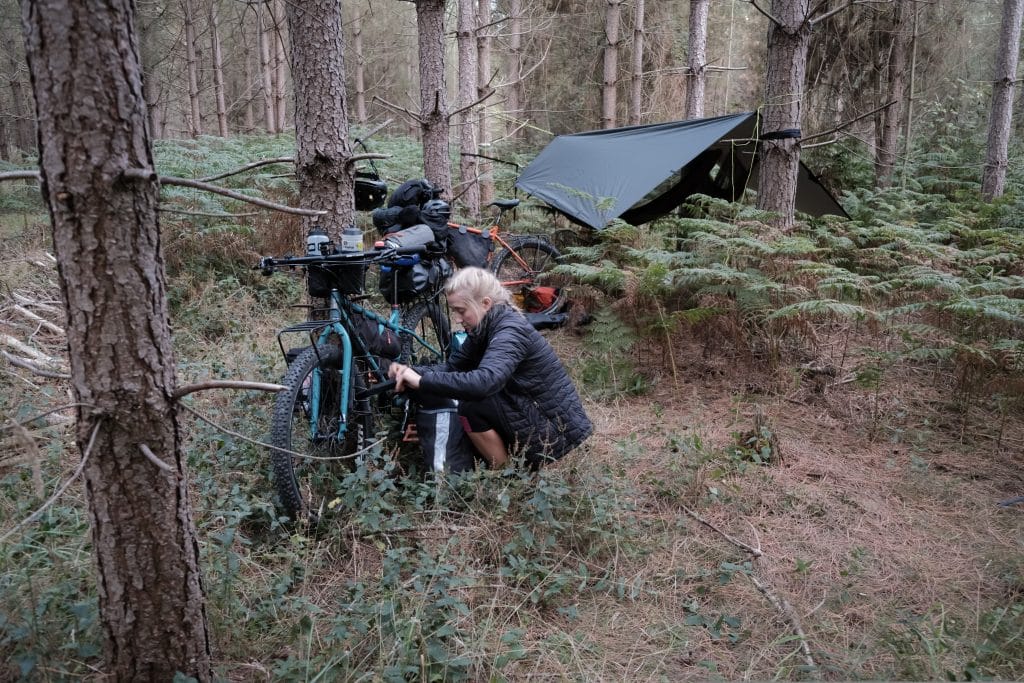
For the ultimate eco-friendly adventure, why not try planning a human-powered experience straight from your front door? You could cycle out into the countryside and camp. Or, you could hike out somewhere and then hire bikes. With a little imagination, the possibilities are endless.
But, we admit, it’s not always possible to always go human-powered. This is particularly the case if lots of equipment is required.
To lower the emissions of your adventure, these transport options should be prioritized.
- Human-powered means are completely emission-free and eco-friendly
- Trains are often the next most sustainable transport option
- Buses are a good next option if you can find relatively direct options
- If you’re going to drive, try and take a full car (why not try lift-sharing?). Solo car trips are very fuel-hungry a not energy-efficient. Lots of individual car journeys can also put local roads and infrastructure under strain.
- Flying uses a huge amount of fuel and this is by far the most unsustainable transport option, particularly for short-haul flights.

TIP: If you are going to go further afield, how about compiling a few trips into one bigger trip to save the transport from multiple different journeys?
Going for Eco-Friendly Outdoor Gear
Because of harmful manufacturing materials, techniques, and fast fashion culture, the textile industry has become one of the largest polluters in the world.
As outdoor pursuits require a lot of clothing and equipment, this is something to pay attention to.
This is something we’re particularly passionate about and we’ve written lots of guides on finding ethical outdoor gear and choosing eco-friendly outdoor brands. But the basic gist is:
- Only buy what you need and make sure you find the right product for you
- Opt for high-quality products that will last
- Going second-hand is a great way to lower your carbon footprint
- Try to pick responsible outdoor brands that use ethical manufacturing techniques
- Be sure to maintain your equipment, giving it lots of TLC.
- Recycle and reuse outdoor equipment that’s coming to the end of its life
Want more ethical outdoor guides and tips in your life? Sign up for our newsletter to get our latest posts
Go for Eco-Friendly Food Choices
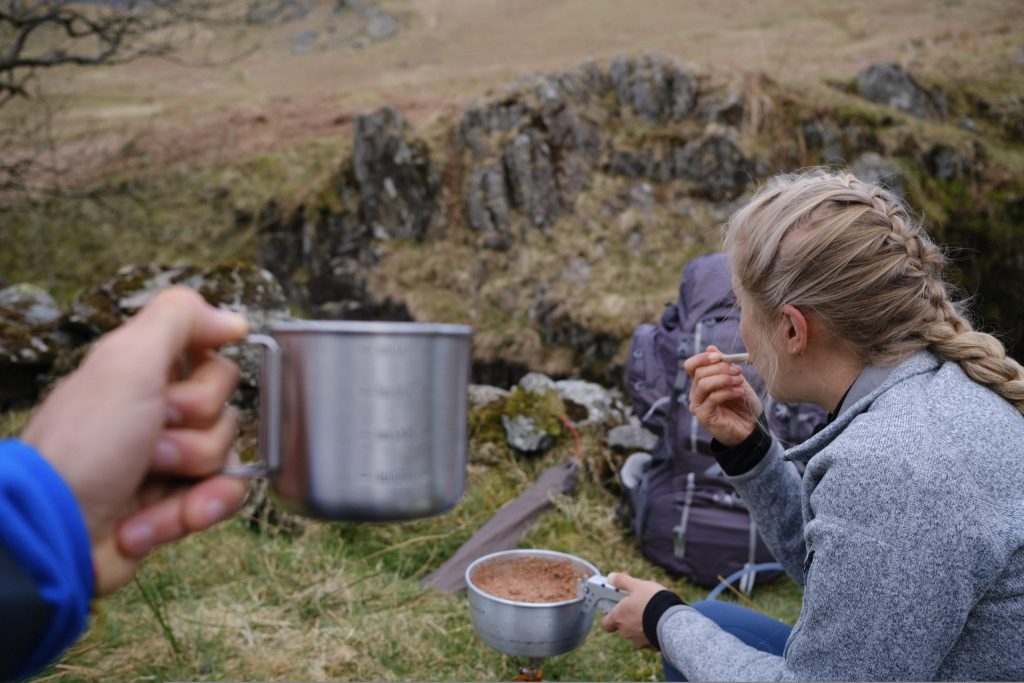
If you want to reduce your carbon footprint, your diet is one of the most important things to focus on. The same applies to your outdoor activities.
At Veggie Vagabonds, we’re massive advocates for a plant-based diet, but it’s also important to prioritize local foods that are in-season and don’t use lots of packaging.
Do Some Research
A little bit of online research can go a long way to helping you pick a more sustainable trip. From picking the right destination to going at the right time, finding local transport options, taking the right equipment and finding local food etc.
All these things will massively lower the impact of your outdoor trips and will be helped by learning some local knowledge. Try looking at regional groups online, in places like Facebook, Reddit or other forums.
If you’re planning a specific trip, like a bikepacking tour, you could also ask others for tips. Places like the Bikepacking Facebook page are filled with biking experts. You can share your trip ideas and it’s likely others will have first-hand info to share.
Check You’ve Got Everything
And a last prepping tip: make sure you’ve got everything before you go!
There’s no point doing lots of research and investing in brilliant eco-friendly outdoor items if you leave them at home.
When this happens, chances are you’ll have to make extra journeys and perhaps buy last-minute things which won’t last much longer than the trip. Double-check all your bags before you leave to avoid this happening.
PT.2 Tips for the Trail
Once you’ve planned a sustainable adventure, the next step is making green decisions whilst you’re out in the wild. When you’re hiking/biking/paddling or what have you, your actions will have the most immediate impact on the beauty around you.
Leave No Trace
Whatever the trip, the most crucial aspect is to leave no trace. There are Seven Leave No Trace Principles, but the general idea is to minimize any impact you have on the landscape you’re passing through.
Camping resposibly, disposing of waste properly, not disturbing local environments or wildlife…
Check out the guide to properly fill you in.
We’ve also got lots of specific tips on:
Check the Local Etiquette
It’s not always possible to research local etiquette before your trip. Sometimes it’s easiest from the trail.
National parks will often have visitors offices filled with guidance, trail signage might give useful information and locals are also brilliant banks of knowledge.
Don’t be afraid to ask about your route, camping spots, wildlife and nature etc. It can be a good way to make friends along the way too.

Be Respectful of Wildlife & Nature
Though this is covered in the Leave No Trace principles, it’s worth mentioning again here.
Do your best to care for the wildlife and nature throughout your trip. This means sticking to routes and paths, not clearing vegetation for camps, leaving animals be and observing from a distance.
The best way to think of it is, there should be as little evidence of you being there as possible.
Final Thoughts
Making your time outside more eco-friendly is so worthwhile. We’re damn lucky to have such a beautiful natural world and we’re even luckier to be able to explore it.
These steps don’t have to be hard and they can actually encourage you to plan a unique adventure, trying different things and seeing different parts of the world.
We hope this article has been useful and feel free to drop a comment with any Qs below.
